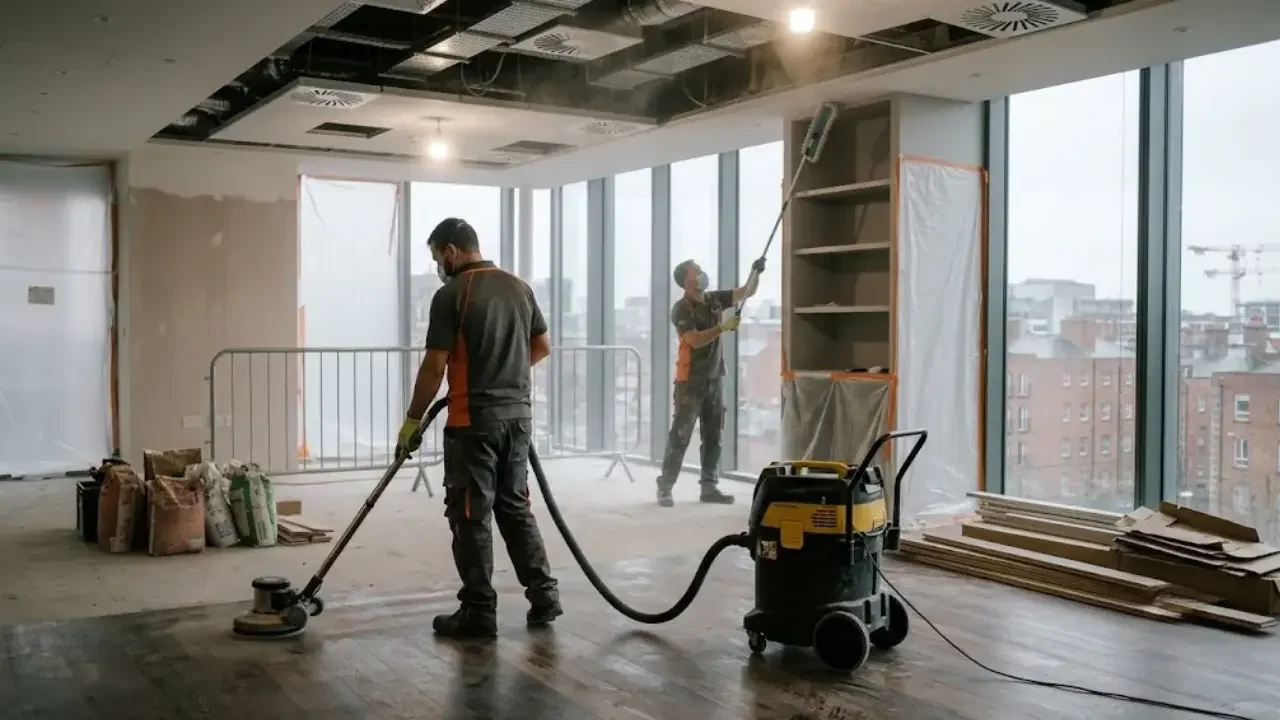
Construction work can transform a commercial property, giving businesses modern offices, updated facilities and a more professional space for customers and staff. However, the work can also leave behind fine dust that affects the building long after the tools have been packed away. Dust from drilling, sanding, cutting and plastering can settle on finished surfaces, enter shared areas and affect the condition of a newly refurbished workplace.
For commercial property owners, this is more than a presentation issue. Construction dust can pose health risks, interfere with equipment, damage delicate finishes and make premises less suitable for immediate occupation. Professional cleaning is an important part of preparing a property after building work, but it must sit alongside suitable dust control measures during construction. Businesses arranging after builders cleaning services in Dublin should understand these risks before reopening their premises or accepting a completed site.
Why is Construction Dust a Serious Problem in Commercial Buildings?
Construction dust is made up of particles created by different materials and activities. Plastering and sanding can produce fine gypsum and filler dust, while cutting concrete, bricks and stone can release respirable crystalline silica. Woodworking can also produce wood dust, including particles from engineered timber products. The risks vary according to the material, the task and the amount of dust released.
The Irish Health and Safety Authority (HSA) identifies silica dust as a serious occupational health hazard. Exposure to respirable crystalline silica can cause silicosis, lung cancer and chronic obstructive pulmonary disease. The HSA’s 2026 inspection campaign highlighted the importance of controlling exposure during activities involving concrete, stone, brick and other sand based materials. These risks make dust control a workplace health issue, not simply a matter of keeping a building tidy.
Source: Health and Safety Authority, Silica Dust.
1. Construction Dust Can Affect Indoor Air Quality
Dust does not always remain on the surface where it first settles. Fine particles can become airborne again when people walk through a room, move furniture or disturb contaminated surfaces. In a commercial building, this can affect adjoining offices, meeting rooms, reception areas and other spaces if the construction zone has not been properly separated from occupied areas.
The impact depends on the type of dust, the effectiveness of site controls and the building’s ventilation arrangements. A room may look clean while fine dust remains in less visible places or continues to circulate. This is particularly important in workplaces that rely on controlled indoor conditions, including healthcare facilities, laboratories and other specialist environments. Cleaning can remove settled residue, but it should not be treated as a substitute for appropriate containment and dust extraction during construction.
2. Fine Dust Can Create Health Risks for Staff and Contractors
People working in or near a construction area may be exposed to dust generated by cutting, grinding, drilling and sanding. Some particles are large enough to irritate the eyes, nose and throat, while finer respirable particles can enter deeper into the lungs. The risk depends on the substance and the level of exposure, which means that visible dust alone cannot be used to judge how safe the air is.
The HSA warns that exposure to respirable crystalline silica can have severe long term consequences. Employers and project teams must assess the hazards associated with the work and apply suitable controls, such as dust suppression, on tool extraction and appropriate protective equipment where required. A post construction cleaning service helps remove remaining dust from premises, but it cannot undo exposure that has already occurred or replace the safety controls required while dusty work is in progress.
Source: HSA, Construction Industry Safety Guidance.
3. Dust Can Damage New Finishes and Commercial Assets
A newly refurbished property often contains expensive materials and fittings that must be kept in good condition. Dust can settle on polished floors, glass partitions, decorative lighting, metal fixtures and newly installed furniture. Fine abrasive particles can also create a risk of scratching if they are dragged across delicate surfaces during unsuitable cleaning methods.
This matters when a property has been prepared for a client inspection, a tenant handover or a business reopening. A floor that looked excellent after installation can lose its appearance if construction residue is spread across it or removed using the wrong equipment. Professional cleaners assess the surface material and use suitable methods to remove dust and residue without creating additional damage. Any scratches, chips or defects caused during construction should still be recorded and referred to the responsible contractor.
4. Dust Can Affect Ventilation and Specialist Equipment
Commercial buildings may contain air handling units, ventilation grilles, computer equipment, electronic controls and other systems that need suitable protection during construction. If dust enters areas that should have been isolated, it may settle on components or accumulate around air intakes and accessible grilles. The extent of the problem depends on the system design, the type of dust and how effectively the work area has been contained.
Businesses should discuss dust protection with the building manager, mechanical contractor or facilities team before construction begins. Ventilation systems should be inspected and serviced by competent personnel when there is evidence that dust has entered areas that require specialist attention. General cleaning can address accessible surfaces, but it should not be presented as duct cleaning, equipment servicing or internal system decontamination unless those specific services have been arranged.
5. Construction Dust Can Disrupt Business Operations
A commercial property can appear ready for use but still require additional cleaning or technical checks before staff can return. Dust left on workstations, equipment or shared facilities may delay the setup of offices and the installation of sensitive equipment. In customer facing premises, visible residue can also affect the first impression made on visitors, clients and prospective tenants.
The operational cost extends beyond the cleaning bill. A delayed opening may affect staff productivity, appointments, deliveries and planned occupancy. Property managers can reduce this risk by making construction dust control and post construction cleaning part of the wider project requirements. A clear record of the work completed also helps the business team confirm that the premises have been prepared to the agreed standard before occupation.
6. Dust Can Spread Beyond the Construction Zone
Commercial refurbishment rarely takes place in isolation. Work in one suite may sit beside an occupied office, a shared corridor or a reception area used by the public. If dust moves beyond the area where it was generated, other parts of the building can be affected and may require additional cleaning or assessment.
Physical separation, suitable protective barriers and effective dust extraction can help control the movement of particles while work continues. The construction team should also consider how workers, tools and materials move between the work zone and the rest of the building. After the work is complete, the cleaning scope should reflect the areas affected by dust rather than concentrating only on the room where the construction took place.
7. Visible Dust Does Not Tell the Whole Story
One of the most common mistakes is assuming that a property is free from dust because the surfaces look clean. Fine particles can remain in less accessible areas, behind installed fittings or around equipment. Some hazardous particles are too small to be seen with the naked eye, so a visual inspection cannot establish that airborne exposure is safe.
For this reason, a suitable cleaning plan should be based on the work performed, the materials involved and the areas affected. Where the project used materials that can create hazardous dust, the site manager must ensure the relevant exposure risks have been controlled and assessed. If there is reason to suspect contamination within ventilation systems or specialist equipment, the appropriate technical contractor should inspect those systems rather than relying on general cleaning alone.
8. Poor Dust Management Can Lead to Additional Costs
Allowing construction dust to spread can increase the amount of work needed before a property is ready for use. Areas outside the original work zone may need cleaning, equipment may require inspection and delicate surfaces may need extra care. If trades return to cut, sand or drill after the premises have been cleaned, previously completed areas may also need further attention.
These problems are easier to manage when responsibility is clear. The project manager should coordinate the construction team, building management and cleaning provider so that dust controls remain in place and affected areas are identified. The agreed cleaning scope should distinguish routine after builders cleaning from specialist work, such as internal duct cleaning, hazardous material remediation or cleaning that requires specific technical equipment.
Why Routine Cleaning Alone Is Not Enough
Routine commercial cleaning is designed to maintain premises during normal use. Construction creates a different set of challenges because the types and quantities of dust vary, and some materials can present specific health risks. Using an ordinary dry brush or unsuitable vacuum can disturb settled particles and release them back into the air.
The UK Health and Safety Executive advises that dry sweeping construction dust can produce high levels of airborne particles and should be avoided where possible in favour of suitable control methods. Although this is UK guidance rather than Irish legislation, it provides a useful technical reminder that the removal method matters as much as the visible result.
Source: Health and Safety Executive, Construction Dust and Dry Sweeping.
Professional after builders cleaning focuses on removing suitable construction residue from surfaces and preparing the agreed areas for use. It does not replace on site dust suppression, extraction, containment or specialist assessments. For a commercial project, the most effective outcome comes from combining good controls during the building work with an appropriate cleaning service after the work has finished.
Which Commercial Properties Need Particular Attention?
Construction dust can affect any premises undergoing refurbishment, but some environments need closer coordination because of their equipment, occupants or operational requirements.
| Property type | Why dust control matters |
| Offices | Dust can affect workstations, meeting areas, electronics and staff comfort |
| Healthcare premises | Dust control must be coordinated with the facility’s infection prevention, safety and operational procedures |
| Laboratories and life science facilities | Specialist equipment and controlled areas may require specific protection and technical checks |
| Retail units | Dust and residue can affect merchandise, display fittings and the customer experience |
| Hotels and hospitality venues | Dust can affect guest areas, furnishings and the planned reopening of facilities |
| Educational buildings | Construction work may take place near occupied rooms, shared corridors and specialist teaching spaces |
| Warehouses and industrial premises | Dust may affect stock, machinery, controls and areas with specific operational requirements |
The exact precautions depend on the project and the materials involved. A business operating in a controlled environment should consult its facilities, health and safety or technical team before deciding that ordinary post construction cleaning is sufficient.
How Can Businesses Reduce Construction Dust Risks?
Effective dust management starts before the main work begins. Project managers should identify materials and activities that can create hazardous dust, assess how particles could move through the building and agree suitable controls with the contractors. Measures may include dust suppression, on tool extraction, separation of the work zone and protection of equipment or areas that must remain in use.
Once the building work has finished, the site manager should confirm that the affected areas can be cleaned safely and that any specialist contamination concerns have been addressed. The cleaning provider should be told about the type of work carried out, the materials involved and any surfaces or equipment that need special care. This information helps the team plan suitable methods instead of treating every construction site in the same way.
What Should You Look for in After Builders Cleaning Services in Dublin?
For commercial properties, the provider should be able to explain the proposed cleaning scope and its limits. Ask which areas and surfaces are included, how dust will be removed, how delicate finishes will be protected and how the team will report damage or residue that cannot be removed safely. It is also sensible to confirm how the provider coordinates access with the site manager and how additional work is approved.
Businesses should also check that the service matches the actual condition of the premises. A lightly refurbished office may need a different level of work from a building where concrete, stone, timber or plasterboard has been cut and sanded. If the site may contain hazardous materials or dust that requires specialist handling, that issue should be assessed by a suitably qualified professional before routine cleaning starts.
Prepare Your Commercial Property with Dublin Clean
Construction dust can affect more than the appearance of a building. It can create health concerns, interfere with equipment, compromise newly finished surfaces and add avoidable work before a business can resume normal operations. Managing the problem requires suitable dust controls during construction and a cleaning plan that reflects the materials, condition and intended use of the premises.
Dublin Clean provides commercial after builders cleaning services in Dublin for businesses preparing premises after construction or refurbishment. If your office, retail unit or other commercial property requires post construction cleaning, discuss the work completed, the areas affected and the required handover standard with the team. This helps establish the cleaning scope and identify any requirements that may need a separate specialist service.
Frequently Asked Questions
Why is construction dust dangerous in commercial properties?
Construction dust can contain particles from plaster, wood, concrete, brick and other building materials. Some can irritate the eyes and airways, while respirable crystalline silica can cause serious lung disease, including silicosis and lung cancer. The risk depends on the material and level of exposure, so appropriate dust controls and cleaning methods are important.
Can construction dust affect people after the builders have left?
Yes. Dust can remain on surfaces or become airborne again when disturbed after construction activity has stopped. Fine particles may also remain in areas that are difficult to inspect visually. A suitable post construction clean can remove accessible residue, but suspected hazardous contamination or dust inside specialist systems may require separate assessment.
Can construction dust damage office equipment?
Dust may settle on computers, electronic controls and other equipment, particularly when the work area has not been properly separated. The effect depends on the equipment and the amount and type of dust involved. Businesses should protect sensitive devices during construction and follow the manufacturer’s guidance when cleaning them.
Is after builders cleaning enough to make a property safe?
Not on its own. After builders cleaning helps remove suitable dust and residue from the agreed areas, but it does not replace the controls required during dusty work. If hazardous materials, ventilation systems or specialist equipment may be affected, the responsible health and safety or technical team should assess the issue before the premises are used.
When should a business arrange after builders cleaning services in Dublin?
Businesses should contact a cleaning provider once the project scope and likely completion date are known, allowing time to discuss the property and the required service. The actual cleaning should be coordinated with the completion of dust producing work in the relevant areas. If further building work is planned after the clean, additional cleaning may be required.
What information should I provide when requesting a quote?
Provide the property type, approximate size, type of construction or refurbishment work completed and the required handover date. Explain if the project involved concrete cutting, extensive sanding, specialist flooring, sensitive equipment or controlled work areas. These details help the provider assess the scope and identify any requirements that fall outside standard after builders cleaning.