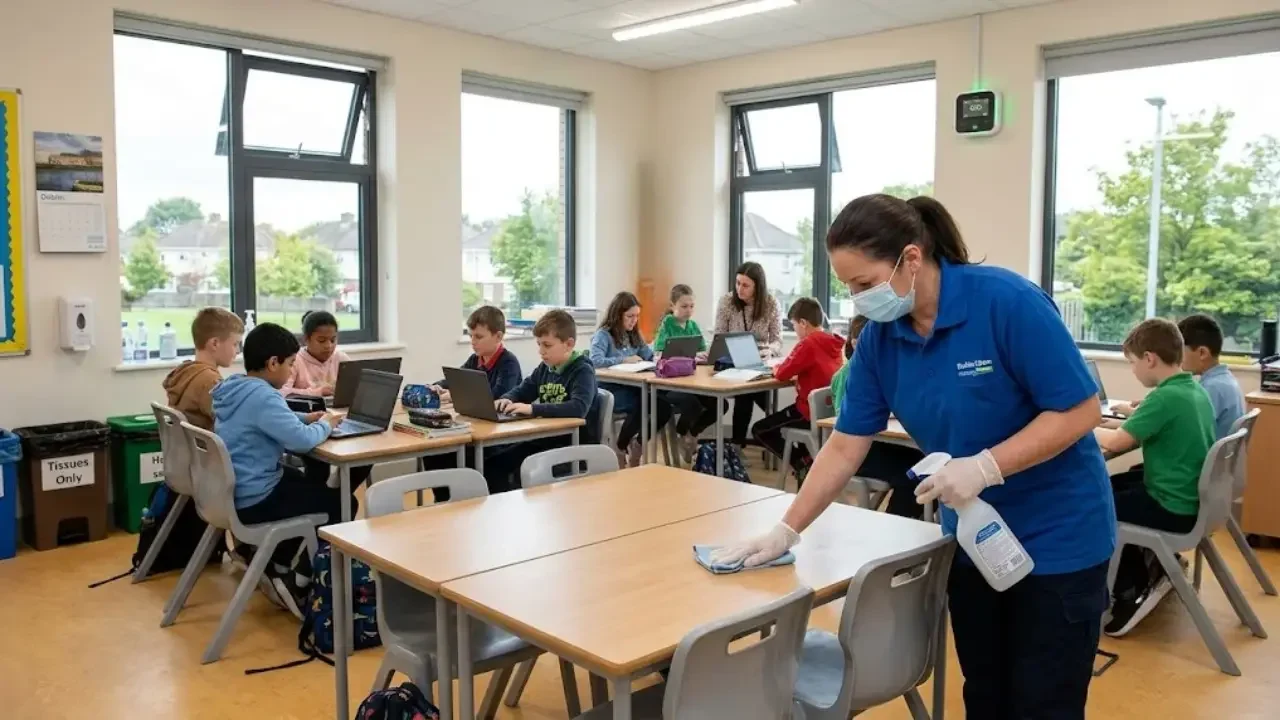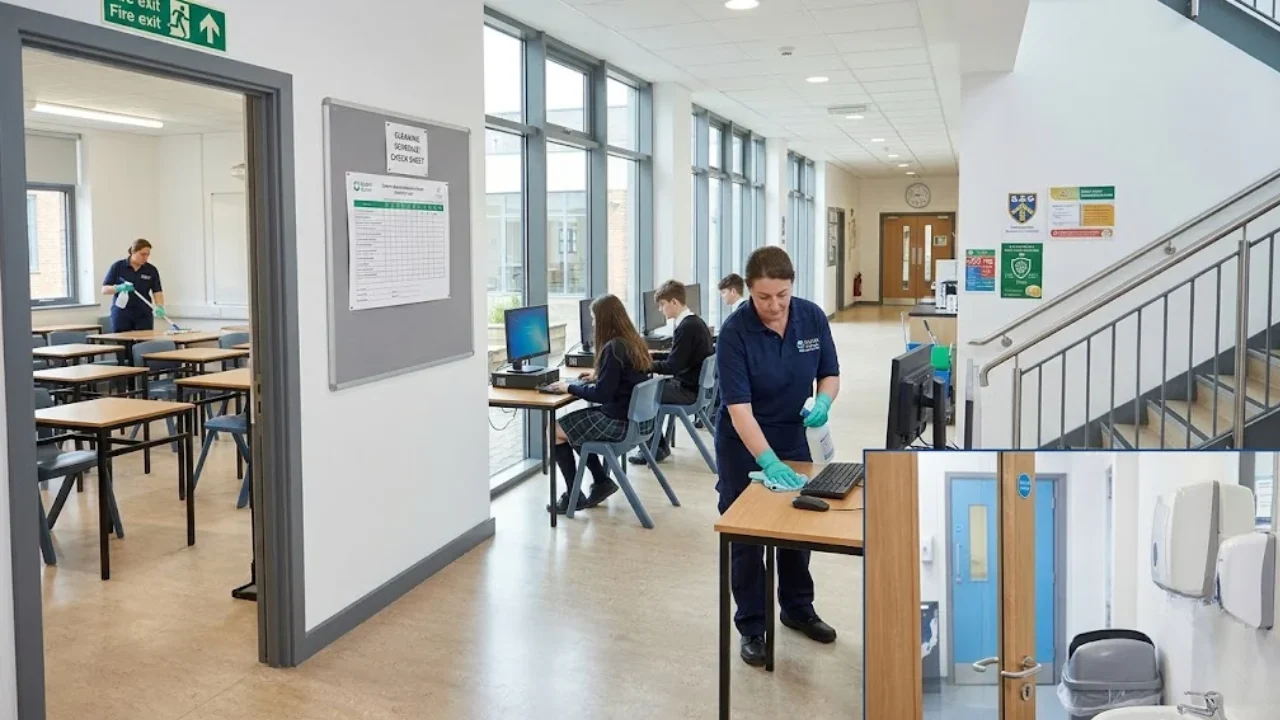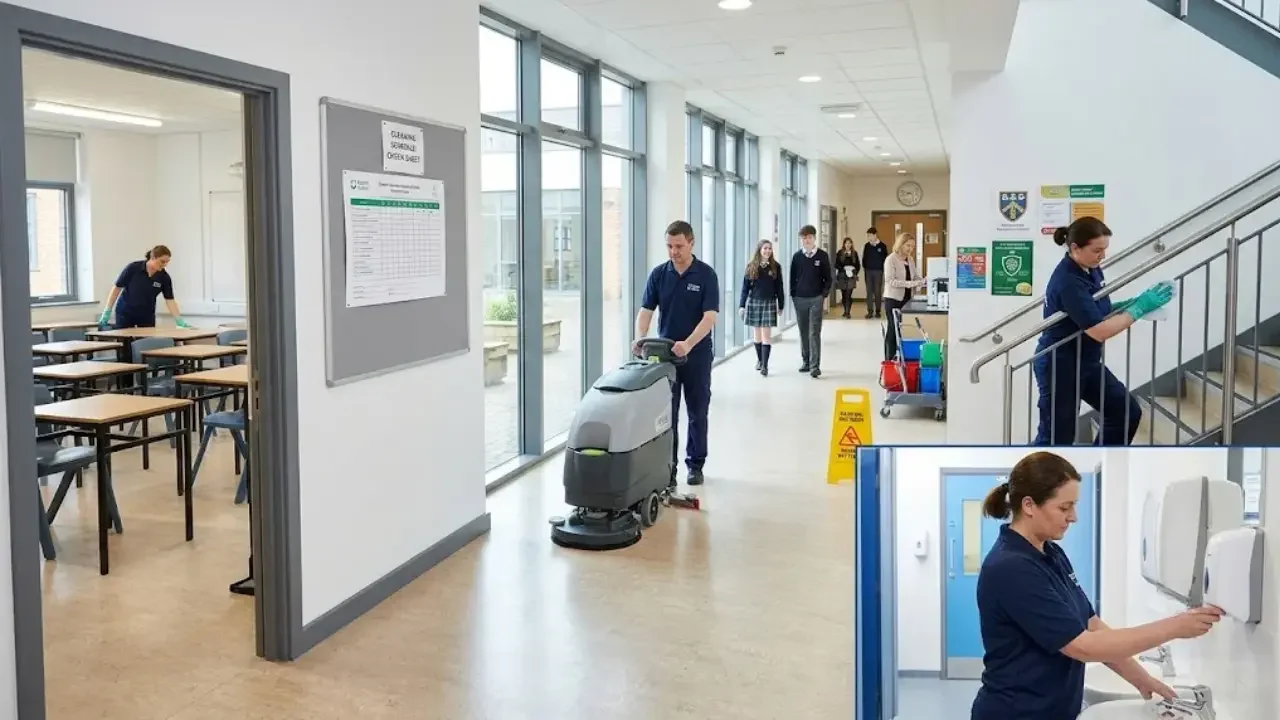
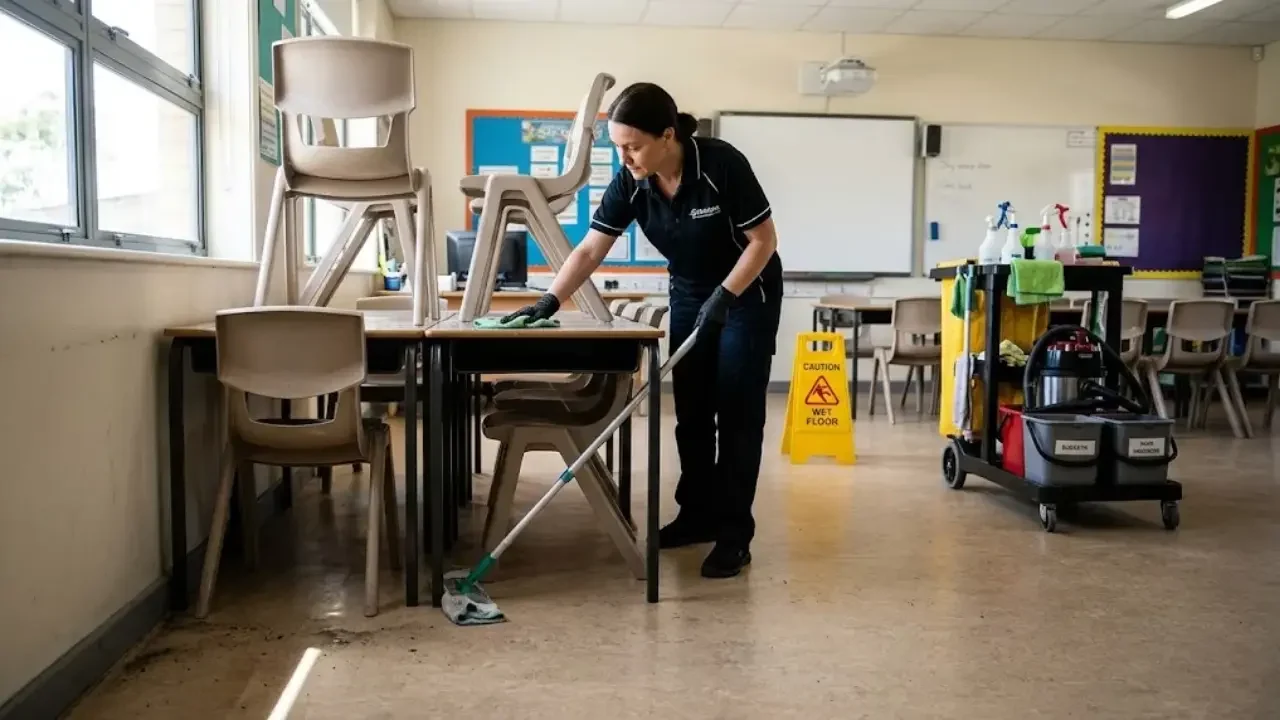
A school can look clean at the end of the day and still have areas that need attention. Classroom floors may be spotless, desks may look tidy, and bins may be empty. Yet dust can remain behind furniture, dirt can collect around fixtures, and marks can build up on surfaces that are rarely included in a routine cleaning checklist. These small oversights can affect the condition of the school environment over time.
The challenge is not always a lack of effort. School buildings contain many different spaces, from classrooms and libraries to staff rooms, storage cupboards and specialist teaching areas. Each space has its own cleaning needs, and less visible areas can be missed when staff work to a tight schedule. For schools in Dublin, a clear cleaning plan should cover both the areas pupils notice and the places that are easy to overlook.
Why Do Some Areas Get Missed During School Cleaning?
Most cleaning routines focus on visible dirt and the areas that receive the most attention each day. This is understandable, particularly when classrooms must be ready for the next school day. However, a room can appear tidy while dust remains along skirting boards, grime collects around furniture legs, or debris sits in corners that are difficult to reach.
The Health Protection Surveillance Centre (HPSC) advises schools and other settings to use written cleaning schedules that specify the items and areas to be cleaned, the frequency, and the equipment and materials required. It also recommends monitoring these schedules to check that the work is being completed properly. This gives schools a practical way to identify gaps instead of relying on visual checks alone. Source: HPSC guidance on routine cleaning.
1. Areas Behind and Under Classroom Furniture
Desks and chairs receive regular attention, but the floor space underneath them can be harder to clean. Dust, pencil shavings, food crumbs and scraps of paper often collect beneath desks, along chair legs and behind classroom storage units. These areas become especially easy to miss when furniture is moved only occasionally or rooms are cleaned quickly between school days.
A good cleaning routine should include moving lightweight furniture when it is safe to do so, vacuuming or mopping accessible spaces, and checking corners behind cupboards and shelves. Heavy furniture should only be moved by staff who can do so safely. A simple rotation plan can also help ensure that less accessible spaces receive attention without disrupting classroom activities.
2. Skirting Boards, Door Frames and Window Sills
These fixtures are easy to overlook because they sit outside the main field of view. Dust gathers along skirting boards, around door frames and on window sills, particularly in rooms with frequent movement and limited time for detailed cleaning. Marks around the lower sections of doors can also build up through everyday contact with shoes, bags and classroom equipment.
Cleaning these areas at planned intervals helps prevent dust and grime from accumulating. Staff should pay attention to corners, joints and the edges where surfaces meet, rather than wiping only the most visible section. The cleaning frequency should reflect the level of use and the amount of dirt present, with a more detailed clean scheduled when routine maintenance is no longer sufficient.
3. The Undersides and Edges of Tables and Chairs
Wiping the top of a desk does not clean the whole piece of furniture. The underside of table edges, chair backs, armrests and the lower parts of chair frames can collect dust, fingerprints and residue from everyday use. In practical classrooms, art rooms and dining areas, dried glue, paint or food marks may also remain around edges and joints.
A school cleaning checklist should identify which furniture surfaces need routine attention and which require periodic detailed cleaning. The method must suit the material, especially where desks have electronic controls, upholstered sections or specialist finishes. Cleaning staff should follow the manufacturer’s instructions where these apply, rather than using a product that could damage the surface.
4. Storage Cupboards, Open Shelving and Display Areas
Shelves can become dust traps, particularly when they hold books, teaching resources, craft supplies or equipment that rarely moves. The tops of cupboards and the spaces between stored items may remain untouched for long periods. Display boards and decorative fixtures can also collect dust along their frames, although these areas may not be included in the daily cleaning routine.
Schools can reduce this problem by agreeing who is responsible for clearing shelves and moving teaching materials before a scheduled clean. Cleaning staff should not rearrange pupils’ work or move confidential documents without permission. A planned rotation for higher shelves and cupboard tops helps keep the task manageable while making sure these areas are not forgotten.
5. Shared Equipment and Specialist Learning Spaces
Computer rooms, libraries, music rooms, science laboratories and practical learning areas often contain equipment that needs a different cleaning method from ordinary classroom furniture. Keyboard edges, computer mouse surfaces, headphones, remote controls and shared tools can be missed if the checklist covers only desks and floors. Equipment may also be damaged by unsuitable products or excess moisture.
Schools should list shared equipment separately and assign responsibility for cleaning it. Staff must follow manufacturer instructions for electronic and specialist items. Where equipment is used by different pupils, the school should set out when it needs cleaning and who completes the task. Irish Department of Education guidance also recommends written schedules for care and support equipment, including the cleaning method and products to use. Source: Department of Education guidance.
6. Corners, Narrow Gaps and Areas Around Radiators
Open floor space is usually straightforward to vacuum or mop. Narrow gaps beside fixed cupboards, the space behind radiators and corners near classroom equipment can be more difficult to reach. Dust and small pieces of litter may collect there, particularly in rooms with limited space or furniture that cannot be moved easily.
During periodic detailed cleaning, staff should check accessible gaps and edges using equipment suited to the surface. Radiators must be cool before cleaning, and staff should not dismantle fixtures or reach into unsafe spaces. If an area cannot be cleaned safely during routine work, the school should arrange suitable access or specialist attention rather than leaving it off the schedule indefinitely.
7. Internal Glass, Window Tracks and Blind Fittings
Glass panels may look clean from a distance while fingerprints remain around their edges. Window tracks can hold dust, grit and small pieces of debris, and blind fittings may collect dust above normal eye level. These details are particularly noticeable in reception areas, corridors and rooms with large internal windows.
A proper schedule should distinguish between cleaning glass, wiping accessible frames and removing debris from window tracks. Staff should use suitable equipment and safe access methods. High windows and difficult to reach fittings may need specialist cleaning, especially where access equipment or additional safety precautions are required.
8. Waste Bin Lids, Pedals and the Floor Around Bins
Emptying a bin does not automatically leave the surrounding area clean. The lid, pedal, rim and outer surface can retain marks from repeated use, while small pieces of waste may fall behind or underneath the bin. In classrooms used for snacks, art activities or practical lessons, residue can also remain around the waste disposal point.
Cleaning staff should check the bin itself as well as the floor around it. Any visible spills should be dealt with promptly using the correct procedure for the material involved. Bins should be returned to a clean, dry area, and waste should be handled safely. This task is easy to include in a room checklist, yet it can make a noticeable difference to the overall condition of the space.
9. Staff Rooms and Shared Kitchen Cupboards
Staff rooms can receive less attention than pupil areas, particularly when cleaning teams have limited time. The floor may be cleaned while cupboard fronts, the sides of appliances, chair legs and less frequently used work surfaces are overlooked. Dust can also collect on the tops of storage units and around small appliances.
A separate staff room checklist helps make sure these spaces receive consistent attention. The school should identify which surfaces are included in the cleaning contract and which tasks belong to staff, such as clearing personal food containers or removing items from a shared worktop. Clear responsibilities prevent tasks from being missed because each person assumes someone else will complete them.
10. Cleaning Equipment and Storage Areas
An area may be cleaned regularly, but the equipment used to clean it can be neglected. Cloths, mop heads, buckets and cleaning tools need proper care after use. If they are stored wet or left dirty, they can develop unpleasant odours and become less suitable for the next cleaning task. A cluttered storage cupboard can also make it harder for staff to find the right equipment.
The HPSC recommends appropriate cleaning and drying of reusable equipment, along with separate colour coded cloths and equipment for different areas such as toilets, classrooms and kitchens. Schools should include equipment maintenance and storage in their cleaning procedures, not treat them as separate from the work. Source: HPSC routine cleaning guidance.
How Can Schools Check for Missed Cleaning Areas?
A reliable check should focus on evidence of completed work, not simply on whether a room looks tidy. School managers and cleaning supervisors can inspect a rotating selection of rooms and compare the results with the agreed schedule. This makes it easier to identify recurring problems, adjust task timings and give staff clear feedback.
A practical inspection can include the following points:
| Area to check | What to look for |
| Under furniture | Dust, paper scraps and debris |
| Skirting boards and window sills | Visible dust, marks and dirt |
| Tables and chairs | Untouched edges, undersides and frames |
| Shelving and cupboards | Dust on tops and around stored items |
| Shared equipment | Residue or missed surfaces, with suitable cleaning methods |
| Window tracks and internal glass | Grit, fingerprints and visible marks |
| Bins and surrounding floors | Spills, marks and waste left behind |
| Cleaning store | Clean equipment, dry storage and clear separation of tools |
The checklist should reflect the layout and use of each school. A science room may need different checks from a library, while a busy dining area may require more frequent attention than a lightly used meeting room. Recording findings also helps the school see if the same areas are repeatedly missed and take action before the problem becomes routine.
What Should Schools Ask Their Cleaning Contractor?
Schools should ask for a written cleaning specification that names the rooms, surfaces and less visible areas included in the service. It should explain the expected frequency of each task and how supervisors check that the work has been completed. This avoids confusion about what is included in a daily clean and what falls under periodic detailed cleaning.
It is also worth asking how staff are trained, how equipment is maintained and how concerns are reported. A dependable contractor should be able to explain its inspection process and show how it responds when a school reports a missed area. The goal is not simply to increase the number of tasks, but to make sure the agreed work is practical, consistent and suitable for the building.
How Dublin Clean Helps Schools Maintain Cleaner Learning Spaces
A dependable school cleaning service needs to cover more than floors, desks and visible marks. The small details matter too, from the edges of furniture to storage areas and cleaning equipment. A clear schedule, trained staff and regular checks help schools maintain their premises and identify gaps before they become recurring problems.
Dublin Clean provides commercial cleaning services for organisations that need a structured approach to maintaining their premises. Schools looking for school cleaners in Dublin can discuss their building layout, daily routines and areas that need additional attention. The right cleaning plan should reflect how each space is used, with clear responsibilities for routine work and periodic detailed cleaning.
Frequently Asked Questions
What areas are most commonly missed during school cleaning?
Areas often overlooked include spaces under and behind furniture, skirting boards, window tracks, cupboard tops, the undersides of tables, shared equipment and the surfaces of waste bins. Cleaning stores can also be missed, even though equipment needs proper cleaning and storage to remain suitable for use.
How can a school tell if its cleaning routine is effective?
The school can use a written checklist, regular inspections and records of completed tasks. Inspections should cover both visible areas and less obvious spaces, with findings recorded so that recurring gaps can be corrected.
Should every area in a school be cleaned every day?
No single frequency suits every surface. The schedule should reflect how often an area is used, the type of activity taking place and the likelihood of visible dirt or contamination. Frequently used areas may need daily or more frequent attention, while some detailed tasks can be scheduled at suitable intervals.
Who is responsible for cleaning shared classroom equipment?
Responsibility should be agreed between the school and its cleaning contractor. The schedule should state who cleans each item, how often it is cleaned and which products or methods are suitable. Electronic and specialist equipment must be cleaned in line with the manufacturer’s instructions.
What should a school include in a cleaning checklist?
A useful checklist should name each area and item, state the cleaning frequency, identify the correct equipment and products, and explain how completed work will be checked. It should include less visible areas as well as the main floors and work surfaces.
Where can schools find school cleaners in Dublin?
Schools can contact commercial cleaning providers that have experience working in educational settings. Before appointing a contractor, they should ask for a clear cleaning specification, staff training details, supervision arrangements and a process for reporting missed tasks.