A Practical Guide for Healthcare Facilities That Put Patient Safety First
Cleanliness is not simply a matter of appearance in a medical environment. It is a critical part of patient care.
Every day clinics across Dublin welcome patients seeking treatment consultations and healthcare support. Throughout the day reception desks treatment rooms waiting areas and washrooms are used by dozens or even hundreds of people.
Without proper cleaning standards these spaces can quickly become environments where bacteria viruses and contaminants spread from one person to another.
For clinic owners practice managers and healthcare professionals maintaining high cleaning standards is not optional. It is a responsibility.
This guide explains the cleaning standards medical clinics should follow and why structured cleaning procedures play such an important role in protecting patients staff and visitors.
Why Cleaning Standards Matter in Healthcare Settings
Medical clinics differ significantly from standard office environments.
Patients visit clinics for many reasons including:
- General medical consultations
- Health assessments
- Diagnostic procedures
- Ongoing treatment
- Preventative care
Many patients may already have weakened immune systems or underlying health conditions.
This means even minor hygiene failures can create serious risks.
A properly maintained clinic helps:
- Reduce the spread of infection
- Improve patient confidence
- Support staff wellbeing
- Maintain regulatory expectations
- Create a safer healthcare environment
The Difference Between Cleaning and Disinfection
One of the most common misconceptions in healthcare environments is that cleaning and disinfection are the same thing.
They are not.
Cleaning
Cleaning removes:
- Dirt
- Dust
- Debris
- Organic matter
This is usually achieved through wiping washing or vacuuming.
Disinfection
Disinfection reduces harmful microorganisms on surfaces through the use of approved disinfectants.
Both processes are important.
Cleaning prepares surfaces while disinfection helps reduce microbial contamination.
Skipping either step can compromise hygiene standards.
Areas That Require the Highest Level of Attention
Every clinic contains areas with different risk levels.
Some spaces require more frequent cleaning due to the number of people using them.
Reception Areas
The reception area is often the busiest part of a clinic.
Patients regularly interact with:
- Reception desks
- Chairs
- Door handles
- Sign in areas
These touch points require frequent cleaning throughout the day.
A clean reception area also reassures patients from the moment they enter the facility.
Waiting Rooms
Waiting areas can quickly become high contact environments.
Patients frequently touch:
- Armrests
- Seating surfaces
- Tables
- Door handles
Regular cleaning reduces the risk of germs transferring between visitors.
Treatment Rooms
Treatment rooms require particularly careful attention.
Cleaning standards should include:
- Surface cleaning
- Equipment cleaning
- Touch point disinfection
- Waste removal
- Floor cleaning
Every patient should enter a room that has been properly prepared and maintained.
Consultation Rooms
Even routine consultation rooms experience substantial daily use.
Desks chairs examination couches and equipment all require regular cleaning.
Maintaining these spaces consistently helps support patient confidence.
Washrooms
Washrooms often become one of the most closely scrutinised areas in any healthcare facility.
Patients naturally associate washroom cleanliness with overall clinic standards.
Cleaning should include:
- Toilet sanitisation
- Sink cleaning
- Floor cleaning
- Mirror cleaning
- Touch point disinfection
- Consumable replenishment
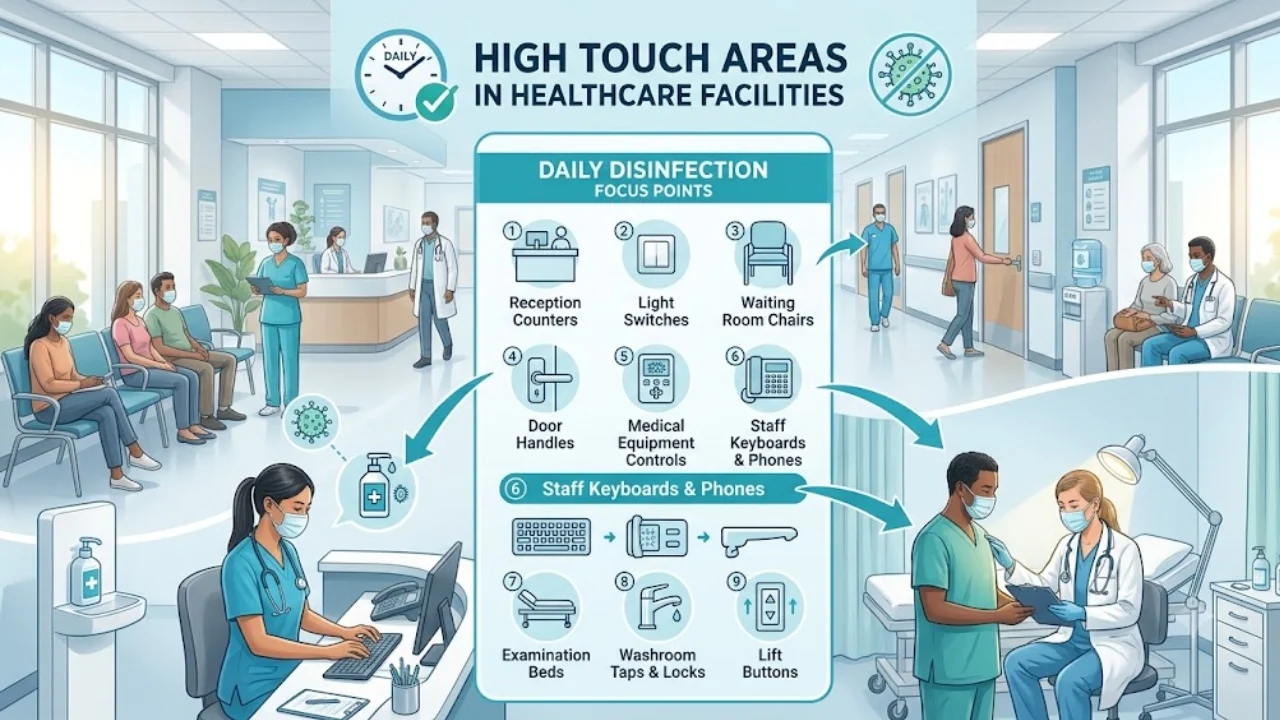
High Touch Surfaces Require Special Attention
High touch surfaces create some of the greatest opportunities for contamination.
Examples include:
- Door handles
- Light switches
- Handrails
- Reception counters
- Payment terminals
- Chairs
- Examination beds
These areas should be cleaned and disinfected more frequently than lower risk surfaces.
A visible cleaning schedule often helps demonstrate commitment to hygiene.
Cleaning Frequency Matters
A common mistake made by some facilities is focusing only on cleaning methods while overlooking frequency.
Even excellent cleaning procedures become ineffective if they are not performed often enough.
The required frequency depends on:
- Patient numbers
- Clinic size
- Type of services provided
- Operating hours
Busy clinics generally require multiple cleaning interventions throughout the day rather than relying solely on end of day cleaning.
Safe Waste Management Is Essential
Healthcare environments generate various forms of waste.
Proper waste handling helps reduce risk and maintain hygiene standards.
Procedures should address:
- General waste
- Clinical waste
- Sharps disposal where applicable
- Waste storage
- Waste removal
Cleaning teams should understand how different waste streams are managed within the facility.
Staff Areas Should Not Be Overlooked
Many clinics focus heavily on patient areas while giving less attention to staff facilities.
However kitchens break rooms and staff washrooms also require regular cleaning.
Maintaining staff areas supports:
- Employee wellbeing
- Workplace hygiene
- Overall cleanliness standards
Clean staff facilities often contribute to higher morale and better workplace satisfaction.
Air Quality Plays an Important Role
A clean clinic is not only about visible surfaces.
Indoor air quality also matters.
Dust and airborne particles can accumulate through:
- Daily foot traffic
- Ventilation systems
- External pollutants
Regular cleaning helps reduce dust build up and contributes to a healthier indoor environment.
This is particularly important in healthcare settings where patients may already have respiratory concerns.
Cleaning Documentation Supports Accountability
Professional healthcare cleaning should be documented.
Cleaning records help demonstrate:
- Tasks completed
- Cleaning frequency
- Inspection results
- Issue resolution
Documented procedures create accountability and help ensure standards remain consistent.
Many healthcare facilities rely on cleaning logs as part of their overall quality management systems.
Staff Training is Just as Important as Cleaning Products
Even the best products cannot compensate for poor technique.
Cleaning personnel should understand:
- Correct cleaning procedures
- Disinfection methods
- Cross contamination prevention
- Safe product usage
- Healthcare cleaning protocols
Proper training helps maintain consistent standards across all areas of the clinic.
Common Cleaning Gaps Found in Medical Clinics
Several issues appear regularly when clinics review their cleaning programmes.
These include:
- Infrequent touch point disinfection
- Missed areas behind equipment
- Inconsistent washroom maintenance
- Poor documentation
- Lack of quality inspections
Identifying these gaps early helps prevent larger hygiene concerns from developing.
Questions Every Clinic Should Ask About Its Cleaning Programme
Regular review helps ensure standards remain aligned with operational needs.
Useful questions include:
- Are high touch surfaces cleaned frequently enough?
- Are cleaning schedules documented?
- Are treatment rooms checked throughout the day?
- Are staff areas receiving the same attention as patient areas?
- Are cleaning procedures reviewed regularly?
These questions can help reveal opportunities for improvement.
PRO TIP
Walk through the clinic from a patient’s perspective.
Start at the entrance and follow the exact route a patient would take.
Pay attention to:
- Reception cleanliness
- Waiting room condition
- Washroom standards
- General presentation
This often reveals issues that staff may overlook because they see the environment every day.
What Patients Notice First
Patients may not assess cleaning standards using technical terminology but they do form opinions quickly.
The areas most commonly noticed include:
- Reception desks
- Waiting room seating
- Washrooms
- Floors
- Smells
- General tidiness
These first impressions often influence how patients perceive the overall quality of care.
Why Professional Healthcare Cleaning Requires a Different Approach
Healthcare environments demand a level of attention beyond standard commercial cleaning.
The focus extends beyond appearance and into risk reduction patient safety and hygiene management.
This is why many clinics prefer working with specialist providers rather than relying on general cleaning solutions.
Experienced healthcare cleaners in Dublin understand the unique requirements of healthcare settings and adapt their procedures accordingly.
Likewise, a dedicated healthcare cleaning company in Dublin will typically have structured systems in place for training quality control and hygiene management.
The Standard Your Patients Expect
Patients may never ask how often your treatment rooms are cleaned.
They may never enquire about disinfection procedures.
However, they expect those standards to be in place.
Cleanliness influences confidence.
Confidence influences trust.
Trust plays a major role in every healthcare interaction.
At Dublin Clean we recognise that healthcare cleaning is about far more than maintaining appearances. It is about creating environments where patients feel comfortable staff can work confidently and clinic managers know standards are being maintained consistently.
Every healthcare facility is different. Patient numbers services and operational demands vary significantly.
That is why effective healthcare cleaning starts with a structured plan built around the specific needs of the clinic rather than a generic checklist.
For healthcare providers across Dublin maintaining strong cleaning standards remains one of the simplest and most effective ways to support patient safety and protect the reputation of the facility.