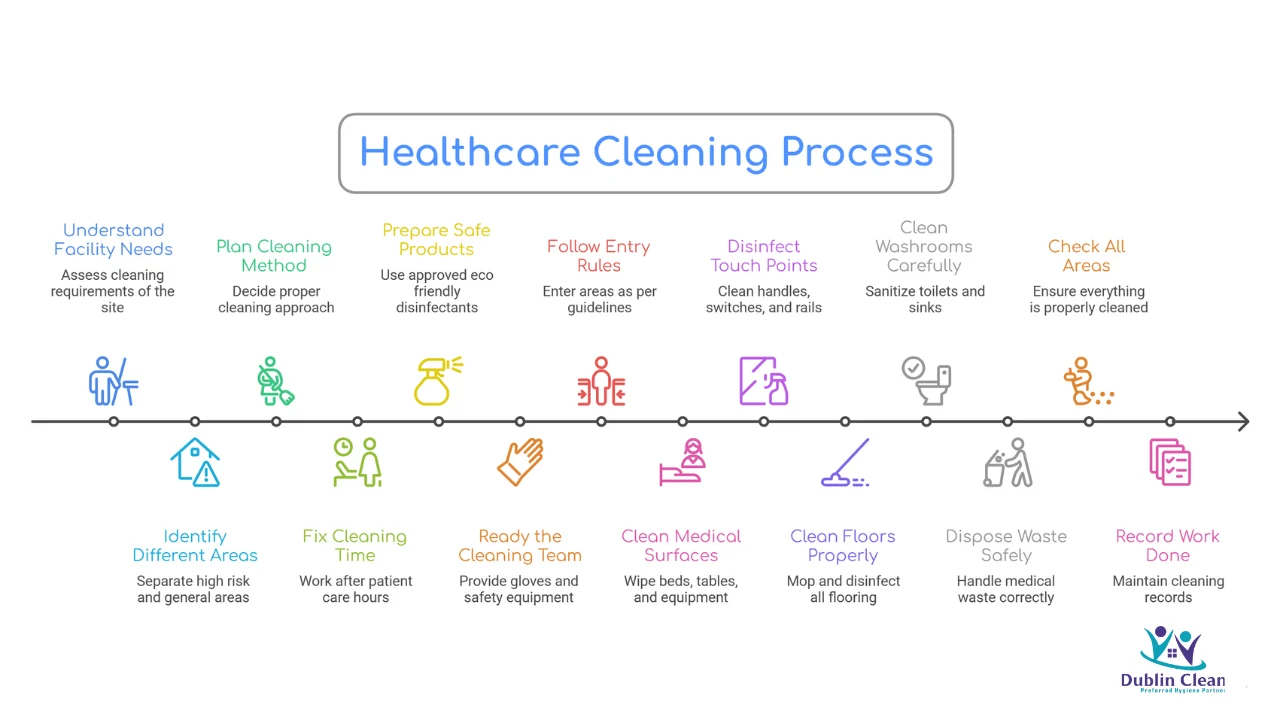
Healthcare environments demand the highest level of cleanliness. Whether it is a clinic, a hospital or a medical centre, every surface must meet strict hygiene standards.
A structured cleaning process ensures patient safety staff wellbeing and full compliance with health regulations. This guide explains each step in detail so you understand how professional healthcare cleaning services maintain safe environments every day.
Why a Proper Healthcare Cleaning Process Matters
Healthcare facilities are different from regular commercial spaces. They deal with:
- High infection risk
- Vulnerable patients
- Strict hygiene regulations
- Continuous usage of rooms and equipment
Without a proper system even small cleaning mistakes can lead to serious health risks.
This is why professional healthcare cleaning in Dublin follows a clear step by step process.
Step by Step Healthcare Cleaning Process
Let’s break down each step in a practical and easy to understand way.
Step 1: Understand Facility Needs
Every healthcare facility is unique. A dental clinic will have different needs compared to a large hospital.
Cleaning teams begin by:
- Understanding the type of facility
- Identifying patient flow
- Reviewing hygiene requirements
This ensures the cleaning plan matches real operational needs.
Step 2: Identify Different Areas
Healthcare spaces are divided into:
- High risk areas such as operating rooms and treatment zones
- General areas such as waiting rooms and corridors
Area Classification Table
| Area Type | Examples | Cleaning Priority |
| High Risk | ICU rooms treatment areas | Very high |
| Medium Risk | Patient rooms consultation rooms | High |
| Low Risk | Reception corridors | Moderate |
Proper classification helps avoid cross contamination.
Step 3: Plan Cleaning Method
Each area requires a specific cleaning approach.
- High risk zones need deep disinfection
- General areas require routine cleaning
- Sensitive equipment needs careful handling
Planning prevents errors and improves efficiency.
Step 4: Fix Cleaning Time
Timing is critical in healthcare environments.
Cleaning teams usually:
- Work after patient care hours
- Avoid peak treatment times
- Coordinate with medical staff
This ensures smooth operations without disruption.
Step 5: Prepare Safe Products
Not all cleaning products are suitable for healthcare use.
Professional teams use:
- Approved disinfectants
- Eco friendly cleaning solutions
- Non harmful chemicals
Safe products protect both patients and staff.
Step 6: Ready the Cleaning Team
A trained team is essential for quality cleaning.
Preparation includes:
- Wearing gloves and protective gear
- Using masks where required
- Following hygiene protocols
Proper preparation reduces contamination risks.
Step 7: Follow Entry Rules
Healthcare facilities have strict entry guidelines.
Cleaning staff must:
- Enter restricted areas only when permitted
- Follow infection control protocols
- Maintain proper hygiene before entry
This step ensures safety at all times.
Step 8: Clean Medical Surfaces
Medical surfaces require detailed attention.
Cleaning includes:
- Wiping beds and examination tables
- Cleaning medical equipment
- Removing visible dirt and residues
Proper surface cleaning is the first step before disinfection.
Step 9: Disinfect Touch Points
High touch areas carry the most germs.
These include:
- Door handles
- Light switches
- Handrails
- Equipment controls
Regular disinfection reduces infection spread significantly.
Step 10: Clean Floors Properly
Floors in healthcare settings collect dust bacteria and moisture.
Cleaning involves:
- Mopping with disinfectant
- Removing stains and spills
- Ensuring floors are dry and safe
Clean floors reduce slip risks and maintain hygiene.
Step 11: Clean Washrooms Carefully
Washrooms require extra care due to high usage.
Cleaning includes:
- Sanitising toilets and sinks
- Disinfecting taps and surfaces
- Maintaining odour control
Hygiene in washrooms directly affects overall cleanliness perception.
Step 12: Dispose Waste Safely
Medical waste handling is a critical step.
Types of waste include:
- General waste
- Infectious waste
- Sharps and hazardous materials
Waste Handling Table
| Waste Type | Handling Method |
| General Waste | Standard disposal |
| Medical Waste | Special containers |
| Hazardous Waste | Strict regulated disposal |
Proper disposal prevents health hazards and legal issues.
Step 13: Check All Areas
After cleaning teams perform a final inspection.
This includes:
- Reviewing cleaned areas
- Ensuring no spots are missed
- Checking hygiene standards
Quality checks ensure consistent results.
Step 14: Record Work Done
Documentation is important in healthcare cleaning.
Teams maintain records of:
- Cleaning schedules
- Areas covered
- Products used
Proper records help with audits and compliance.
Local Importance for Dublin Facilities
Healthcare facilities across Dublin including areas like Swords Dundrum and Clontarf require consistent and professional cleaning support.
Due to high patient flow and strict regulations businesses rely on expert healthcare cleaners in Dublin to maintain hygiene standards without compromise.
For clinics and practices offering medical office cleaning in Dublin a structured cleaning process is essential for building patient trust.
Common Mistakes to Avoid
Avoid these mistakes in healthcare cleaning:
- Skipping high touch areas
- Using incorrect cleaning products
- Poor waste disposal practices
- Lack of staff training
- Irregular cleaning schedules
These mistakes can lead to serious hygiene issues.
PRO TIP
Always separate cleaning tools for different areas.
For example:
- Use different mops for high risk and general areas
- Avoid cross usage of cleaning cloths
This simple step reduces contamination risks significantly.
THINGS TO REMEMBER
- Always follow a structured cleaning process
- Use approved disinfectants only
- Maintain proper records
- Train cleaning staff regularly
- Focus on high touch areas daily
Consistency is the key to maintaining hygiene standards.
Why Professional Healthcare Cleaning Matters
A professional cleaning partner ensures:
- High hygiene standards
- Compliance with regulations
- Trained staff and proper equipment
- Reliable and consistent service
For healthcare facilities this is not optional. It is essential.
Looking for Reliable Healthcare Cleaning?
If you want dependable and professional cleaning support your facility needs expert care.
At Dublin Clean we deliver trusted cleaning solutions tailored for healthcare environments across Dublin.
- Trained and experienced staff
- Safe and approved cleaning products
- Structured cleaning processes
- Reliable service across all facility types
Let us help you maintain a safe clean and compliant healthcare environment.
Contact Dublin Clean today and ensure your facility meets the highest hygiene standards.